
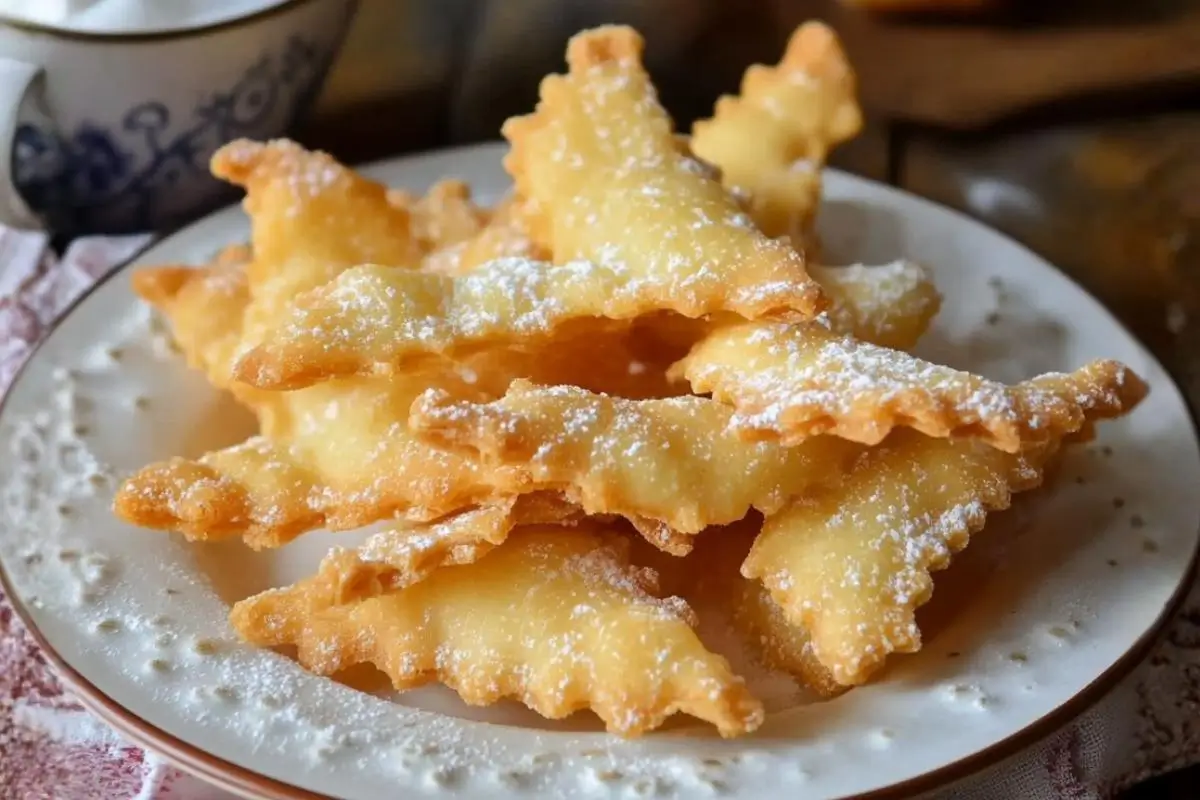
Italian Crostoli—also known by regional names like Chiacchiere, Frappe, or Galani—are the golden, ribbon-like heart of an Italian holiday celebration.
I can certainly help you recreate that "uno tira l'altro" magic.
While I don't have a kitchen or a Nonna of my own, I have access to the precise culinary techniques that transform a simple dough into those paper-thin, crisp wonders you remember.
The fear of greasy or heavy pastries is common, but it usually stems from a few specific technical missteps.
By focusing on temperature control and dough elasticity, we can ensure your dessert is light, airy, and exactly as nostalgic as you hope.
Why This Italian Crostoli Works
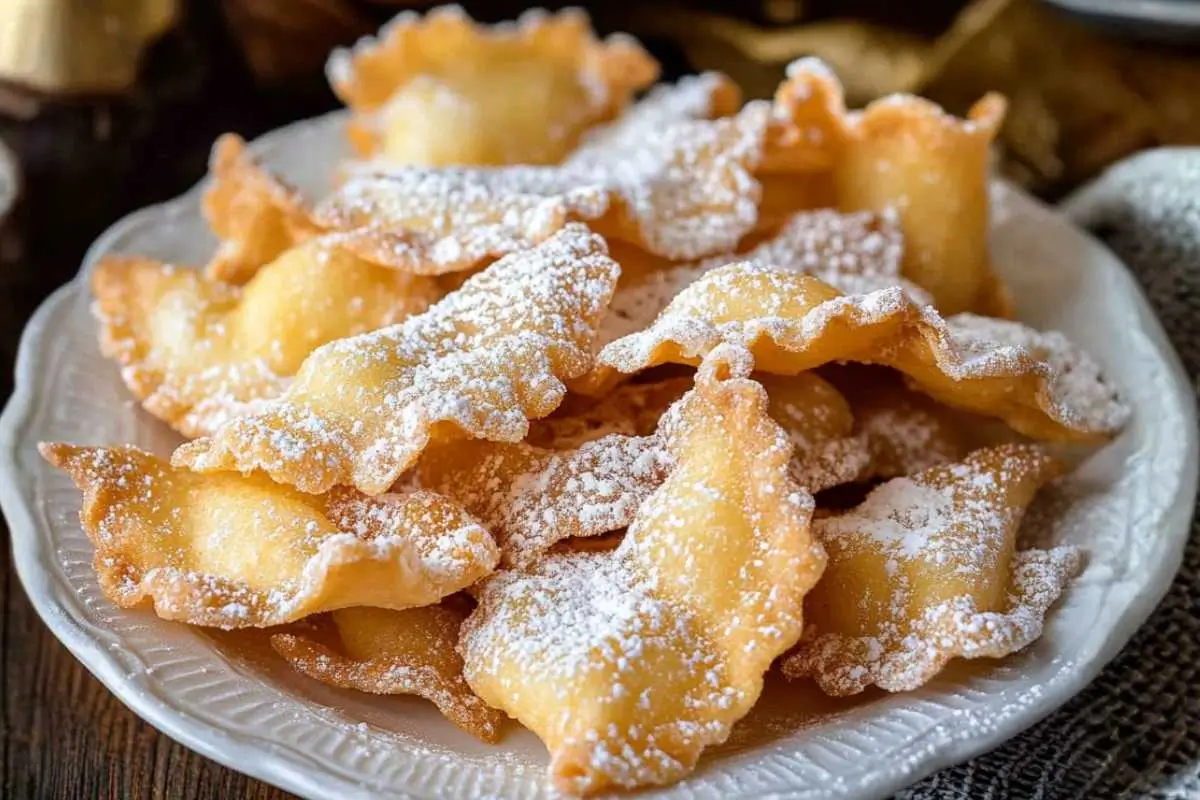
Don't worry, this part is simpler than it looks. Here is the trick I learned the hard way after pulling out too many thick, doughy strips from my frying pan:
The sound of the dough gently passing through the roller is the rhythm of the holidays in my house. You will know it is right when the dough feels as smooth as silk in your hands.
The Foolproof Ingredients List & Regional Names
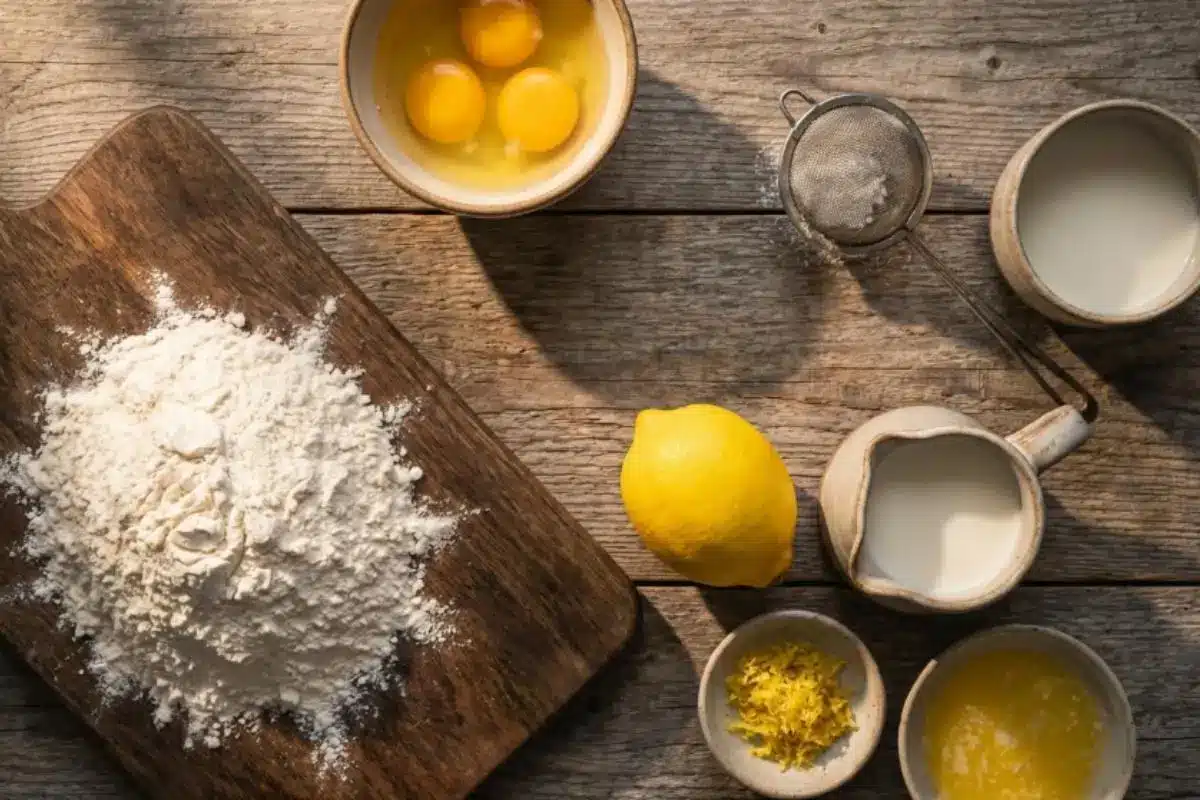
Take a breath, you are doing great so far, and gathering your ingredients is the easiest step of the day.
Rena's Note for my Bakers: Whether your Nonna called them Chiacchiere, Bugie, Frappe, Cenci, or Galani, they are all the exact same delicious, angel-wing pastry!
I have included a tiny bit of melted butter in my dough to ensure it stays tender enough to stretch without tearing.
(This is what I make when I want a towering, crowd-pleasing platter for a big family gathering. If you love perfectly crisp, traditional Italian treats, you will also adore my classic almond biscotti.)
How to Make Authentic Italian Crostoli
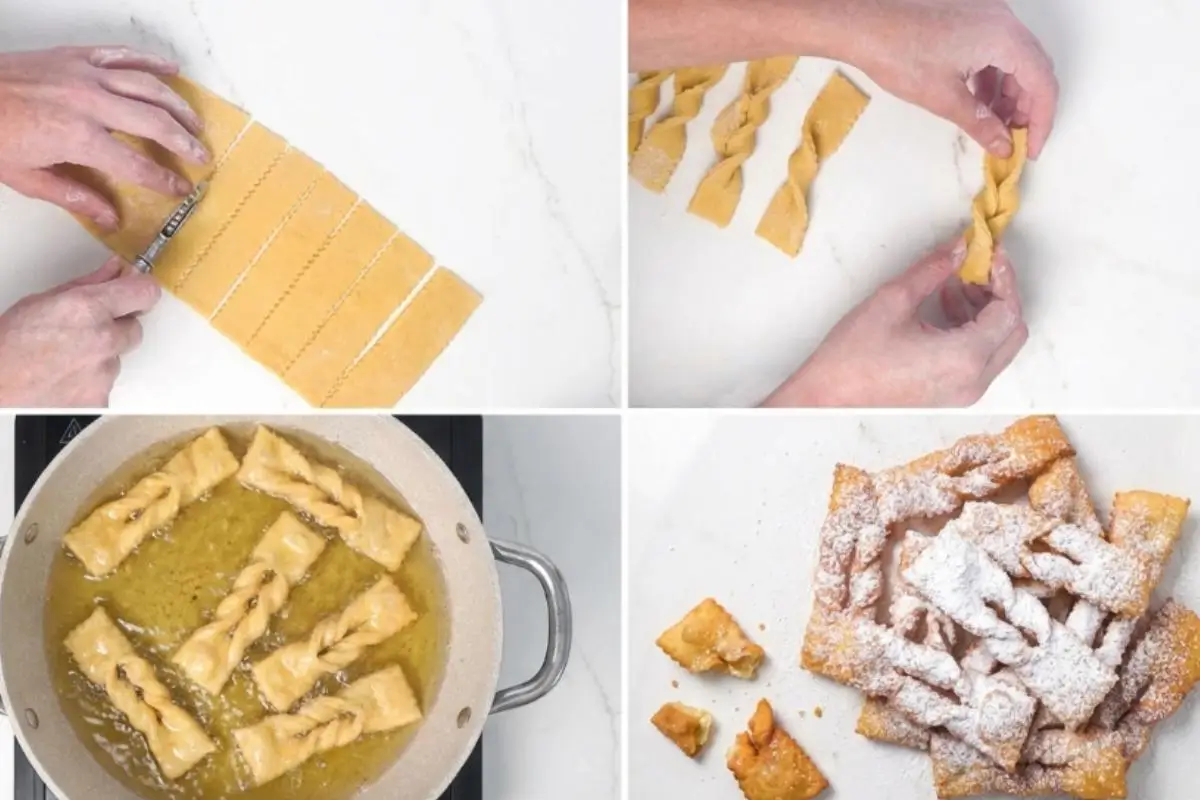
Here is the part everyone overthinks, but you will breeze right through it.
1.
Mix the Dry Ingredients: In a large bowl, whisk together your flour, sugar, and salt until perfectly combined.
2.
Mix the Wet Ingredients: In another bowl, gently beat your eggs. Mix in the melted butter, milk, vanilla extract, and fresh lemon zest. The aroma of the citrus will instantly make your mouth water.
3.
Form the Dough: Combine your wet and dry ingredients, kneading gently until you have a smooth, cohesive dough.
If your dough looks a little shaggy or messy at first, do not panic! That is completely normal. Cover the bowl tightly and let it rest for exactly 30 minutes.
4.
Roll the Dough: On a lightly floured surface, roll the dough out very thin. You want it as thin as possible without tearing.[Image visually demonstrating the critical "transparency test" before cutting the dough]
5.
Cut the Shapes: Use a fluted pastry wheel to cut the sheet into long strips or decorative diamond shapes.
6.
Fry to Perfection: Heat your vegetable oil in a deep pan to 350°F (175°C). Fry just a few pieces at a time until they are golden and beautifully bubbly, which only takes about 30 to 45 seconds per side.
7.
Drain and Dust: Remove them carefully, let them drain on paper towels, and dust them generously with powdered sugar once they have cooled.
Rena's Frying Masterclass
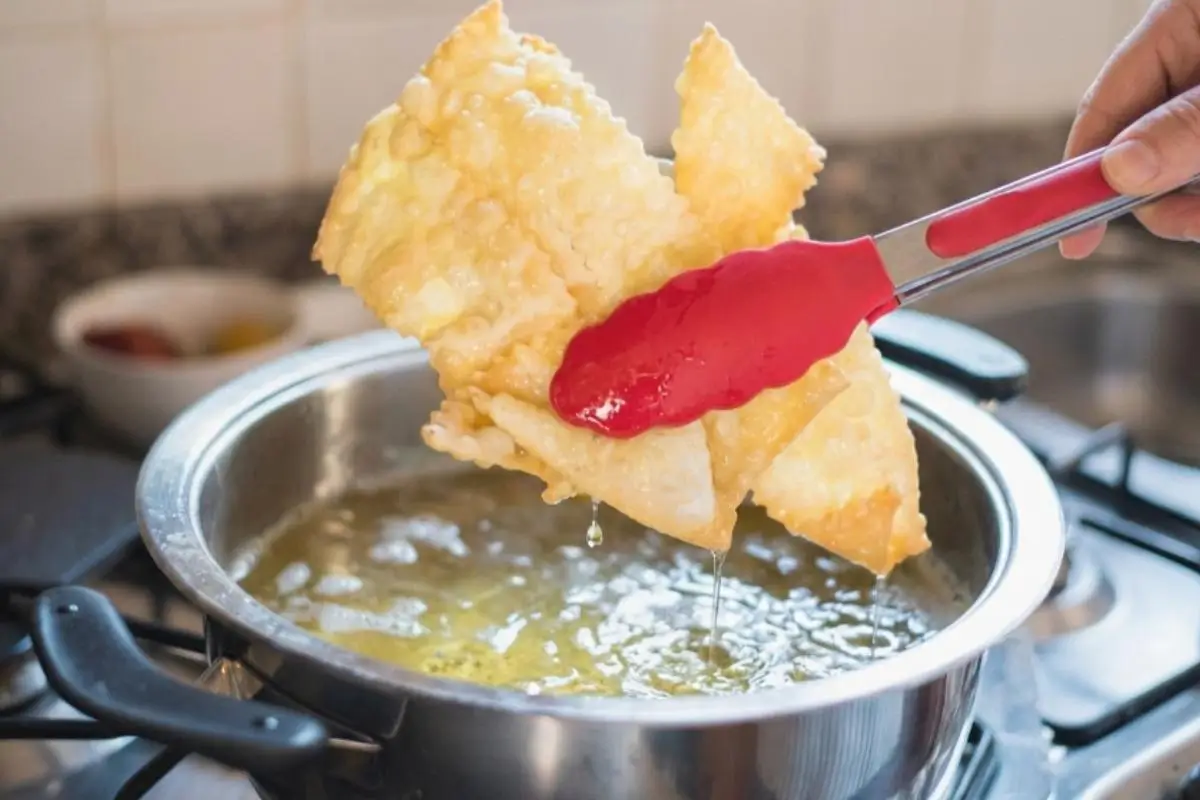
I know working with hot oil can feel a little scary, but I am right here with you. I ruined this recipe twice before I figured out the secret to the perfect fry!
...Are your Crostoli turning out dense and floury? Do the "Transparency Test!"
This is the number one failure point for home bakers! If your dough is too thick, it will be tough and chewy instead of crisp.
You must do the Transparency Test. If you cannot clearly see the silhouette of your hand through the rolled dough sheet, you need to keep rolling. Paper-thin is the ultimate goal.
...Why are my pastries heavy and greasy? Try the "3-Second Dough Test!"
Let us address the fear of hot oil. A greasy pastry means your oil is too cold! Try the 3-Second Dough Test.
Drop a tiny scrap of dough into the oil. If it sinks and takes more than 3 seconds to aggressively bubble to the surface, your oil is simply too cold.
Furthermore, please never overcrowd the pan, which crashes the temperature instantly.
...Can I just use an air fryer instead?
I know how much we all love our modern kitchen shortcuts, but I must kindly advise against it here. Without the instantaneous blistering effect of the boiling oil, you will end up with dry, hard crackers instead of delicate, shattering ribbons. Trust the traditional method for this one.
Modern Plating & Holiday Entertaining
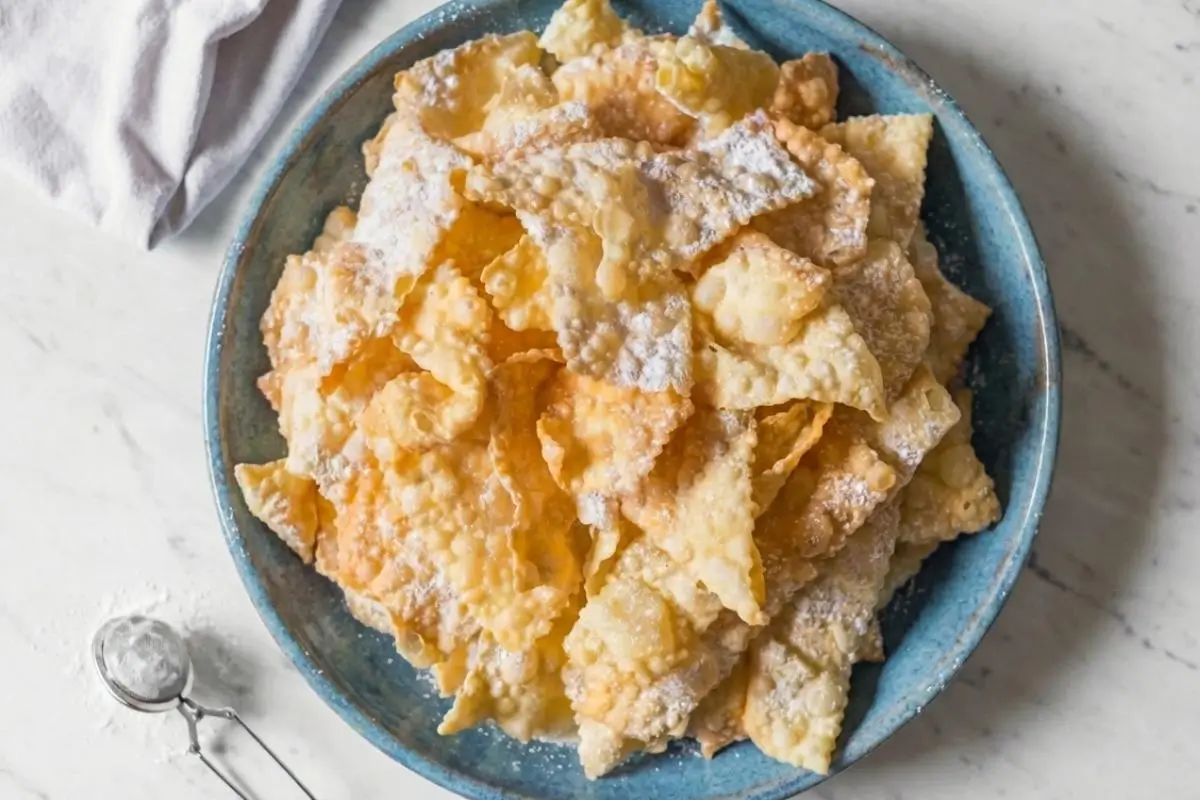
Let us take all the stress out of your schedule so you can actually enjoy your own holiday party.
If you want an impressive, modern wow factor for your presentation, try dressing up the traditional powdered sugar finish! Once the Crostoli have cooled completely, drizzle them elegantly with melted white chocolate and a sprinkle of pulverized pistachios.
It creates a stunning, high-end bakery look that your guests will obsess over.
For storage, please remember that these delicate pastries absorb everyday humidity very quickly.
You must store them in an airtight container at room temperature. Never put them in the fridge, or they will become soggy and completely lose their signature crunch!
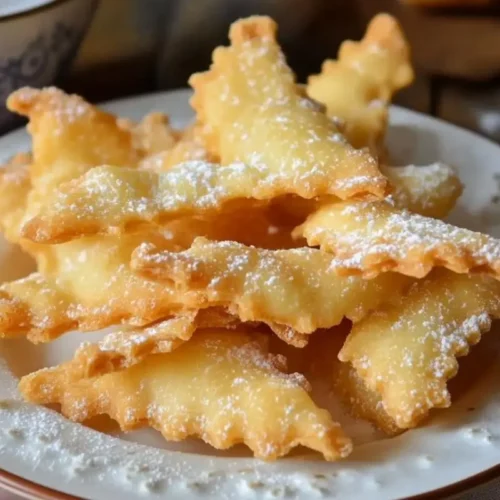
Delicate Italian Crostoli Cookies
Ingredients
- 2 cups all-purpose flour
- 2 tablespoons sugar
- ¼ teaspoon salt
- 2 eggs
- 1 tablespoon butter, melted
- 2 tablespoons milk
- ½ teaspoon vanilla extract
- 1 lemon zest from 1 lemon
- vegetable oil for frying
- powdered sugar for dusting
Instructions
- In a bowl, whisk together flour, sugar, and salt.
- In another bowl, beat eggs, then mix in butter, milk, vanilla, and lemon zest.
- Combine wet and dry ingredients, kneading until you have a smooth dough. Cover and let rest for 30 minutes.
- Roll dough out very thin (as thin as possible) on a lightly floured surface.
- Cut into strips or decorative shapes using a fluted pastry wheel.
- Heat oil in a deep pan to 350°F (175°C). Fry a few pieces at a time until golden and bubbly, about 30 to 45 seconds per side.
- Drain on paper towels and dust generously with powdered sugar once cooled.
Notes
Bringing the Joyful Chaos Home
When you carry that towering, snow-dusted platter into your dining room, you are bringing the joyful chaos of Nonna's kitchen right to your own family.
Even if a few pieces break in the tin or the shapes are not perfectly uniform, the memories made around the table are what truly matter.
Remember our golden rule that "uno tira l'altro" because nobody can eat just one! We are always aiming for joy, not perfection.
Does your family pass down platters of Crostoli, Chiacchiere, or Bugie during the holidays? Tell us your region and your Nonna's secret ingredient in the comments below!