
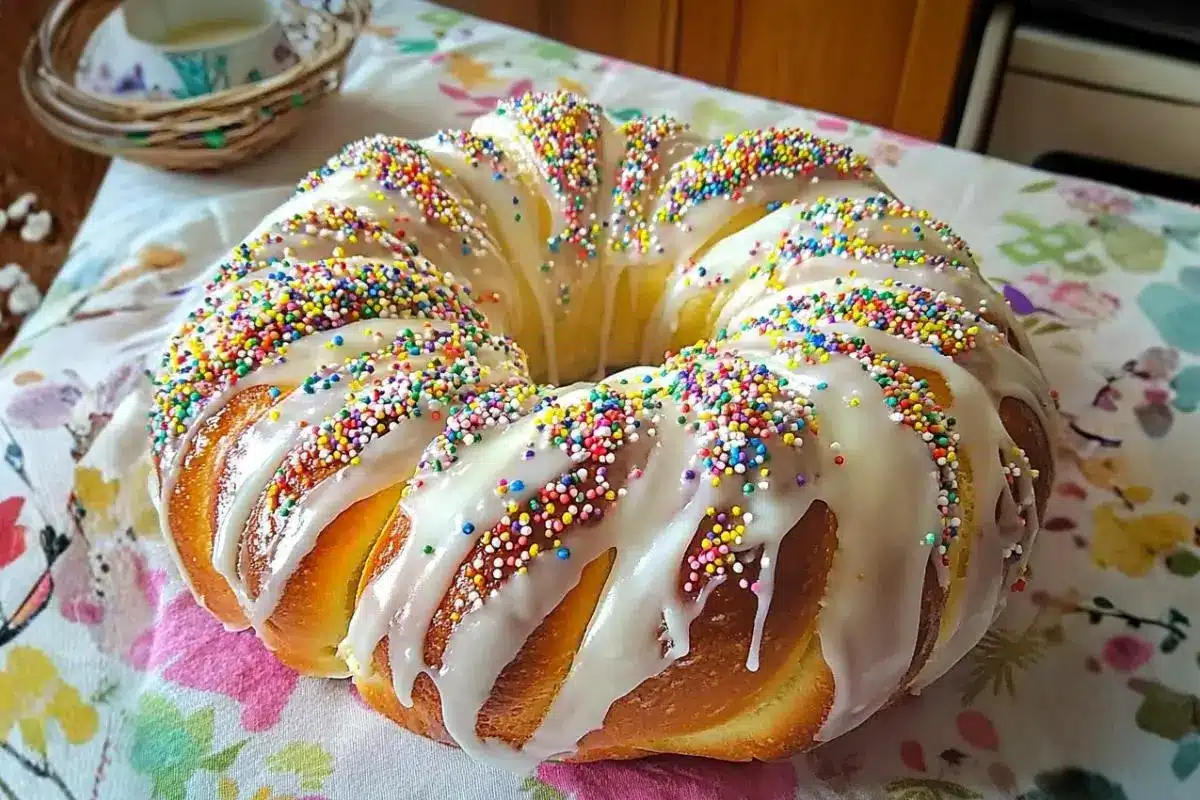
There is a bread that smells like Easter morning before anyone is even awake. I remember Nonna kneading the dough with gentle, practiced hands.
The sweet, warm scent of anise filled the kitchen while the spring sun streamed through the window. By the time the braided wreath came out golden from the oven, glistening with sweet glaze and vibrant sprinkles, it was not just bread.
It was a tradition, a celebration, a little circle of joy you could slice and share.
As the years go by and those old local Italian bakeries slowly fade away, I know the familiar ache of wanting to hold onto those precious memories.
Looking at a smudged family recipe card can feel overwhelming, especially when you are terrified of messing up the yeast or baking a dense brick of dough.
But take a deep breath, because you are going to recreate that exact circle of joy today. I will guide you step-by-step, taking all the guesswork out, so you can confidently keep this beautiful memory alive even if you have never baked with yeast before in your life.
I know that working with sticky, enriched doughs can feel incredibly intimidating. But this recipe is designed to bridge the gap between your grandmother’s beautiful, instinctual baking and simple, foolproof baking secrets, guaranteeing you a soft, feathery crumb every single time.
Why This Italian Easter Bread Works
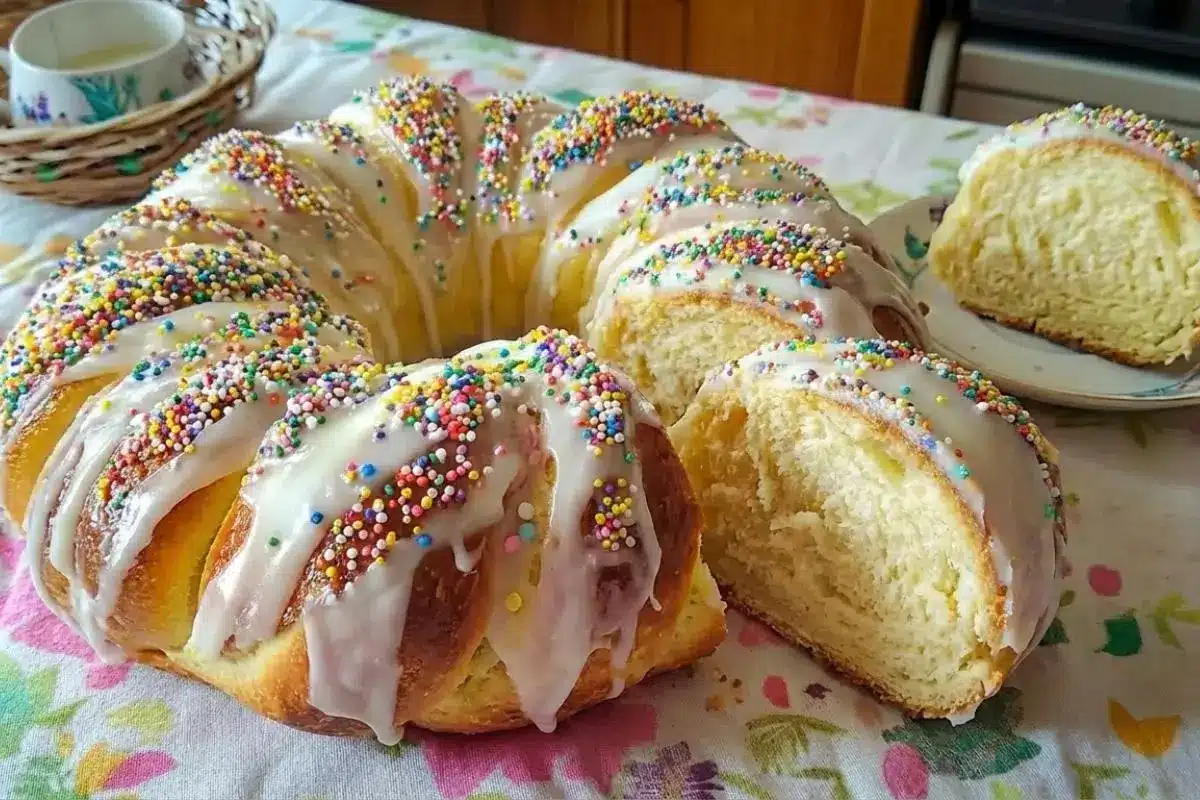
Don't worry, this part is much simpler than it looks, and knowing exactly why things work will give you so much peace of mind.
The secret to mastering Pane di Pasqua is not magic. It is what I call the sensory check. We use exact cues so the dough never dries out or turns into a heavy rock. Here is why this recipe will never let you down:
Listen for the sound of your wooden spoon scraping the side of the bowl as the dough comes together. It will instantly transport you back to childhood.
See? You are already setting yourself up for a beautiful bake.
The Foolproof Ingredients List For Your Italian Easter Bread
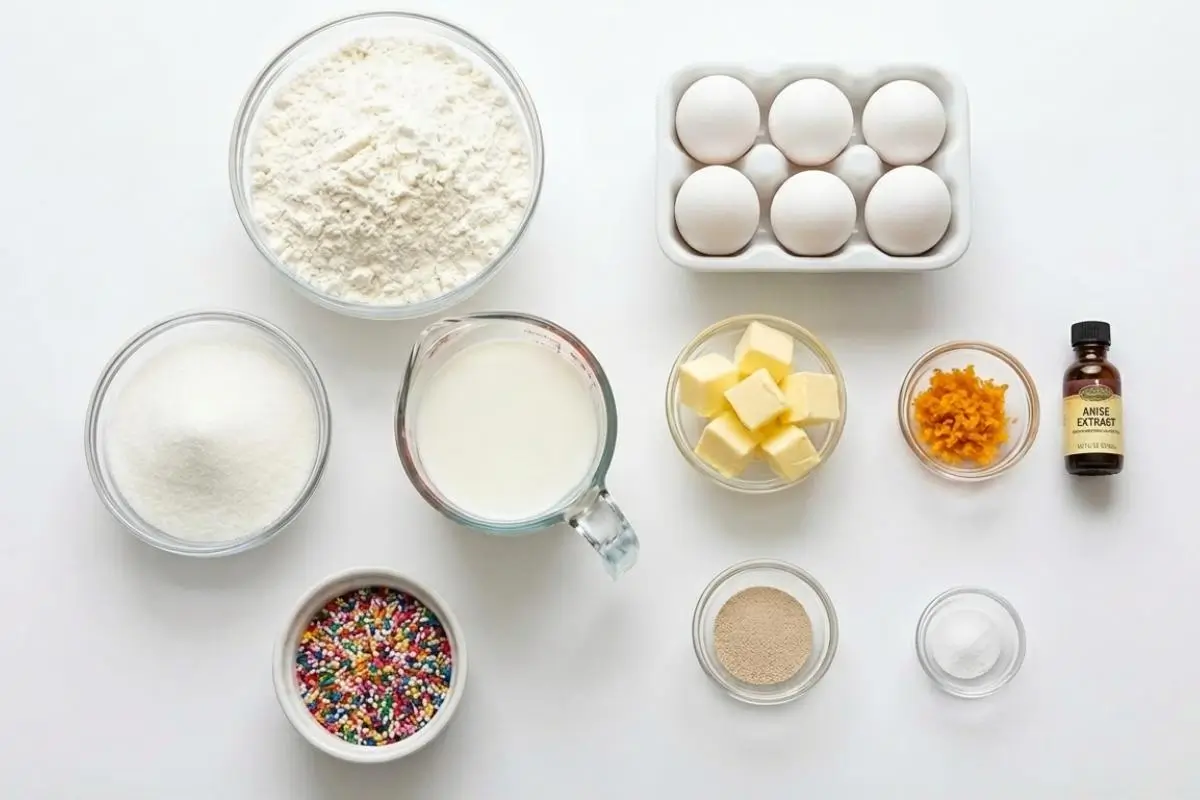
Take a breath, because you probably have almost all of these sitting in your pantry right now.
A Note for Everyone Trying to Recreate Their Childhood Memory: Does your family strictly use orange zest and vanilla instead of anise? Swap it out using a 1:1 ratio to match your exact childhood memory! In my family, this is the moment everyone waits for, playfully debating which flavor is truly authentic.
If you love soft, comforting textures, you will also love my ricotta-based holiday desserts.
Gather everything on your counter, because this is where the magic starts to happen.
How to Make Italian Easter Bread
Here is the part everyone overthinks, but you absolutely will not.
1.
Activate the Yeast: In a large bowl, whisk together your warm milk and yeast. Let it sit for 5 to 10 minutes until it looks foamy. Look for this cue: a bubbly, frothy top means your yeast is alive and ready to work.
2.
Mix the Wet Ingredients: Stir in the sugar, melted butter, eggs, anise extract, vanilla, and lemon zest. Mix until beautifully smooth.
3.
Form the Dough: Gradually add the flour and salt, mixing until a soft dough forms. If yours looks messy here, that is completely normal.
4.
Knead with Love: Turn the dough onto a floured surface. Knead for 8 to 10 minutes. You will feel the dough transform under your hands into a warm, silky ball. You will know it is right when you press it lightly with your finger and the dough springs back quickly.
5.
The First Rise: Place the dough in a greased bowl, cover with a soft towel, and let rise in a warm spot for 1 to 1.5 hours until doubled in size.
6.
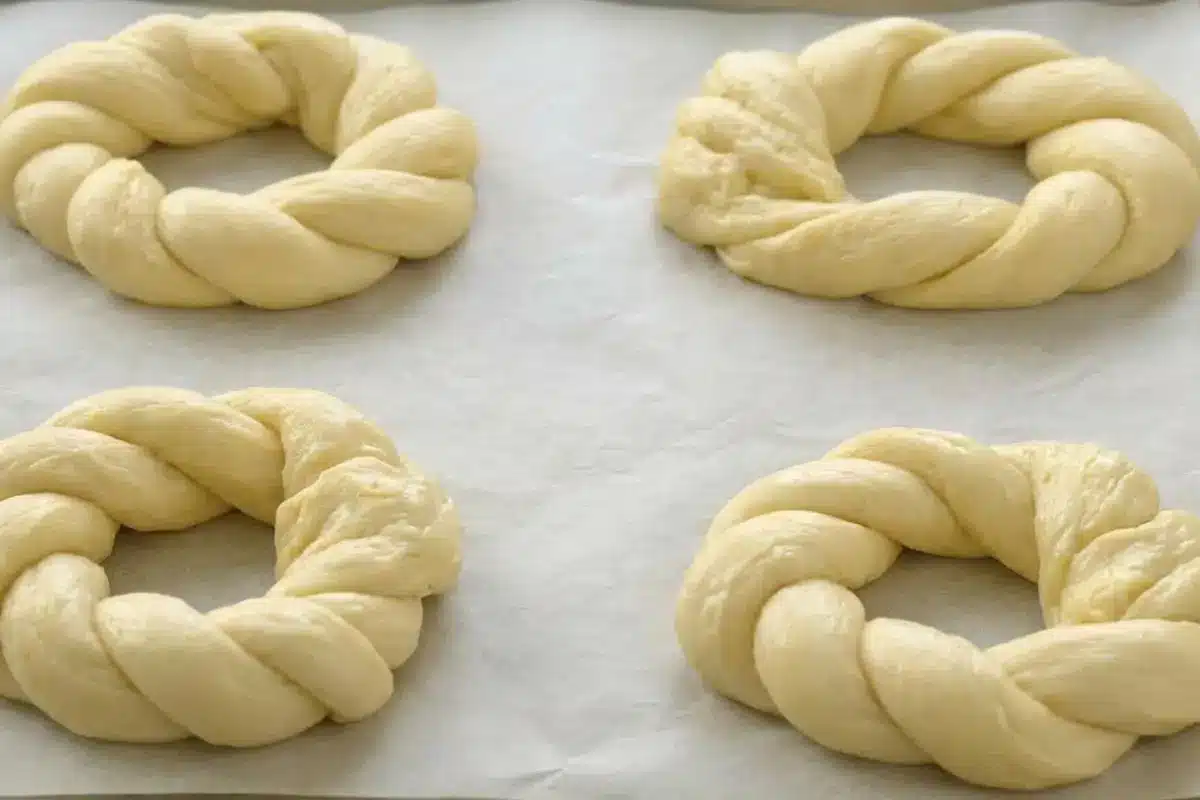
Shape the Wreath: Punch down the dough and divide it into 3 equal pieces.
Mini-Guide for Braiding:
7.
Nestle the Eggs & Second Rise: Place your wreath on a parchment-lined baking sheet. Gently tuck your raw, dyed eggs into the braided pockets. Cover and let rise for 30 to 40 minutes.
8.
Bake: Preheat your oven to 350°F (175°C). Bake for 25 to 30 minutes until the edges are deeply golden brown and your kitchen smells like sweet anise heaven. Let it cool on a wire rack.
9.
Glaze: Whisk together the glaze ingredients. Drizzle generously over the cooled bread and scatter your sprinkles while the glaze is still wet.
You are closer than you think to that perfect first slice, so keep going.
Rena's No-Fail Tips
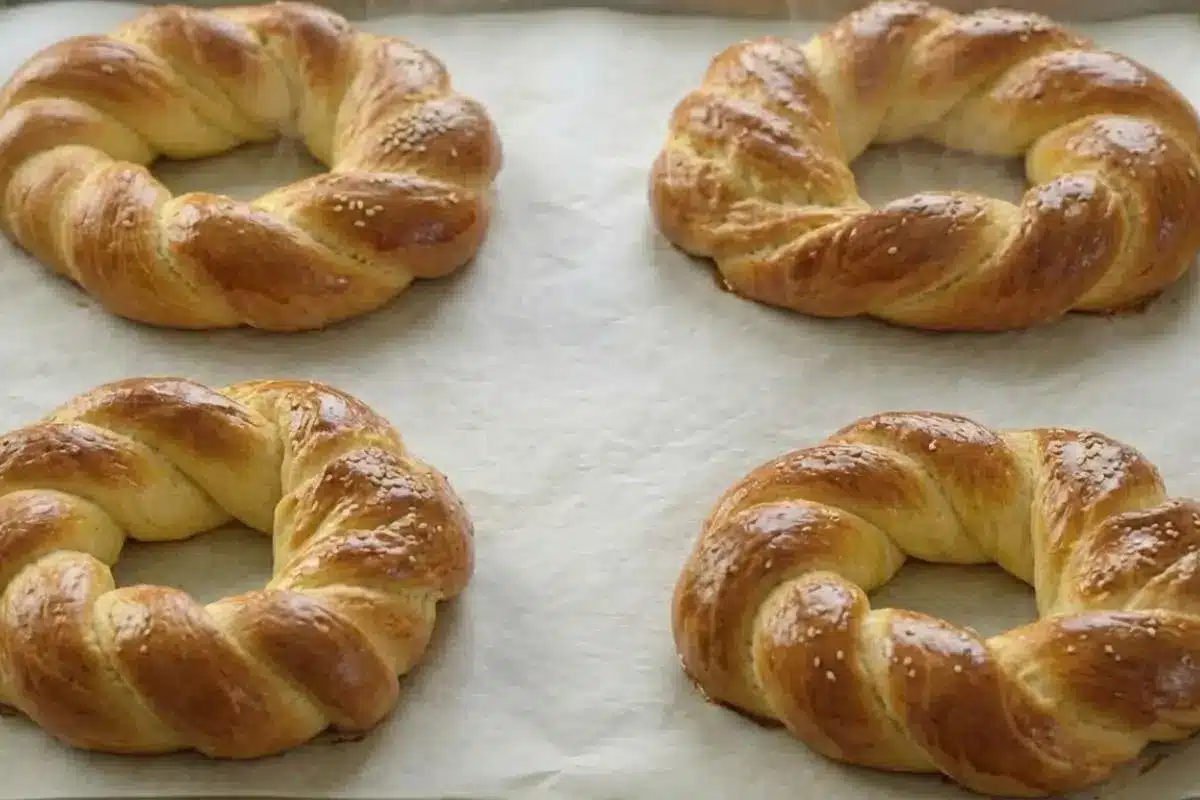
If you are feeling a little nervous about the science of baking, rest easy. I ruined this recipe twice before I figured this out, and I am sharing my secrets so you do not have to struggle.
...Is your dough a sticky mess? Here’s the "Post-It Note" test...
Please do not dump all 4 cups of flour in at once. Humidity and flour brands change how much moisture is absorbed.Here is the trick I learned the hard way:
add your flour gradually and stop when the dough feels like the sticky strip on the back of a Post-It note. It should be delightfully tacky to the touch, but it should not leave a thick paste on your fingers.
...Do I use raw or hard-boiled eggs in the braid?...
This is the question I get asked the most! You absolutely must use raw eggs in the braid.
If you use pre-boiled eggs, the heat of the oven will overcook them, giving you a dreaded green-gray yolk and a strong sulfur smell. Raw eggs will perfectly and safely hard-boil as the bread bakes.
...What if my yeast doesn't bubble?...
Yeast is a living ingredient and needs a cozy environment. Your milk needs to be in the 110°F to 115°F safe zone, feeling warm like comfortable bathwater.
If the milk is too hot, it kills the yeast. If it is too cold, the yeast will stay asleep. A quick test is to wait 10 minutes.
If your mixture does not get foamy, throw it out and start over. It is the cheapest ingredient, and starting fresh saves your entire recipe!
Armed with these secrets, you are going to bake just like a true Italian grandmother.
Storage & Freezing
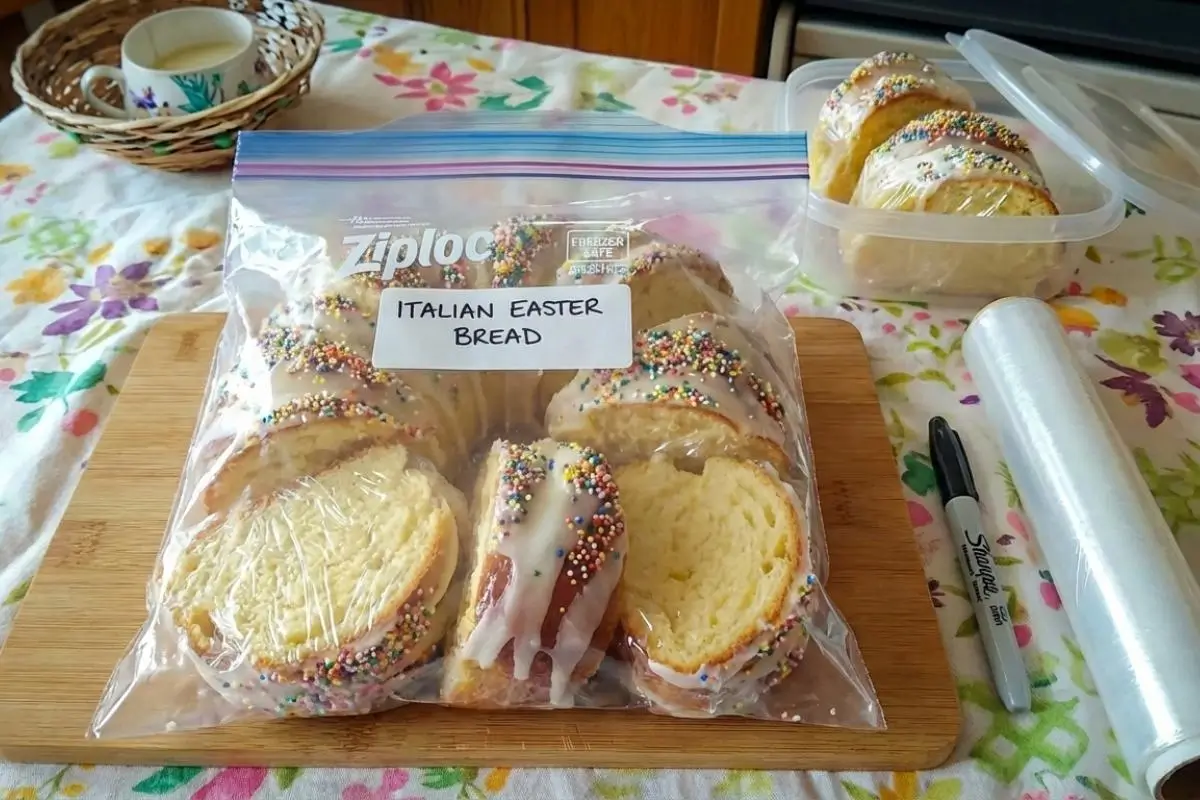
Do not stress about timing, because this beautiful bread fits easily into real life.
This is what I make when I want something comforting but simple. If you are short on time, use my Overnight Cold Rise hack.
Let the dough do its very first rise in the refrigerator overnight. This breaks the baking process into two manageable days, which is perfect for slow Sunday mornings or busy holiday weekends.
Once your bread is baked, never put it in the refrigerator. Cold air crystallizes the starches and makes bread stale incredibly fast. Instead, wrap your cooled wreath snugly in aluminum foil and keep it right on the counter at room temperature for up to 3 days.
See? You have complete control, and you are doing beautifully.

Italian Easter Bread (Anise-Flavored)
Ingredients
- 1/2 cup whole milk warm
- 1 packet active dry yeast 2 1/4 tsp
- 1/2 cup granulated sugar
- 1/4 cup unsalted butter melted
- 3 large eggs
- 1 teaspoon anise extract or 2 tsp for extra flavor
- 1/2 teaspoon vanilla extract
- 3 1/2 cups all-purpose flour up to 4 cups
- 1/2 teaspoon salt
- 1 lemon zest only, optional
- 1 cup powdered sugar for glaze
- 2 to 3 tablespoons milk for glaze
- 1/2 teaspoon vanilla or anise extract for glaze
- 1 dash colorful nonpareil sprinkles for garnish
Instructions
- In a large bowl, combine warm milk and yeast. Let sit 5 to 10 minutes until foamy.
- Stir in sugar, melted butter, eggs, anise extract, vanilla, and lemon zest. Mix until smooth.
- Gradually add flour and salt, mixing until a soft dough forms.
- Knead on a floured surface for 8 to 10 minutes until smooth and elastic.
- Place dough in a greased bowl, cover with a towel, and let rise in a warm spot for 1 to 1.5 hours, until doubled.
- Punch down the dough and divide into 2 or 3 ropes. Braid them, form into a wreath, and place on a parchment-lined baking sheet.
- Cover and let rise 30 to 40 minutes. Preheat oven to 350°F (175°C).
- Bake 25 to 30 minutes until golden brown and cooked through. Cool on a wire rack.
- While the bread cools, whisk together glaze ingredients. Drizzle over the bread and add sprinkles while glaze is still wet.
Notes
The Final Warm Hug
There is nothing quite like the immense joy of pulling apart hot, feathery, sweet bread with your own fingers, the sugary glaze melting just a little bit onto your hands. It is the taste of pure comfort.
Even if your braid ends up a little lopsided this first time, or if your shaping skills need a bit of practice, please remember something important:
You have successfully preserved a precious piece of heritage. In my kitchen, we firmly believe in memories, not masterpieces.
The love and patience you poured into kneading that dough is exactly what your family will remember for years and years to come.
Did your Nonna use anise or did she prefer bright orange zest? Tell us your family’s secret flavor profile in the comments below! I cannot wait to read your beautiful stories.